
Peptide Clinic Marketing: 7 Ideas That Actually Work
Running a peptide clinic? Then you know. Facebook flinches at half your ads. Google wants forms filled in. And plenty of your future patients got burned by some influencer's "protocol" last year, so now they trust nobody.
Tough crowd. Doable, though.
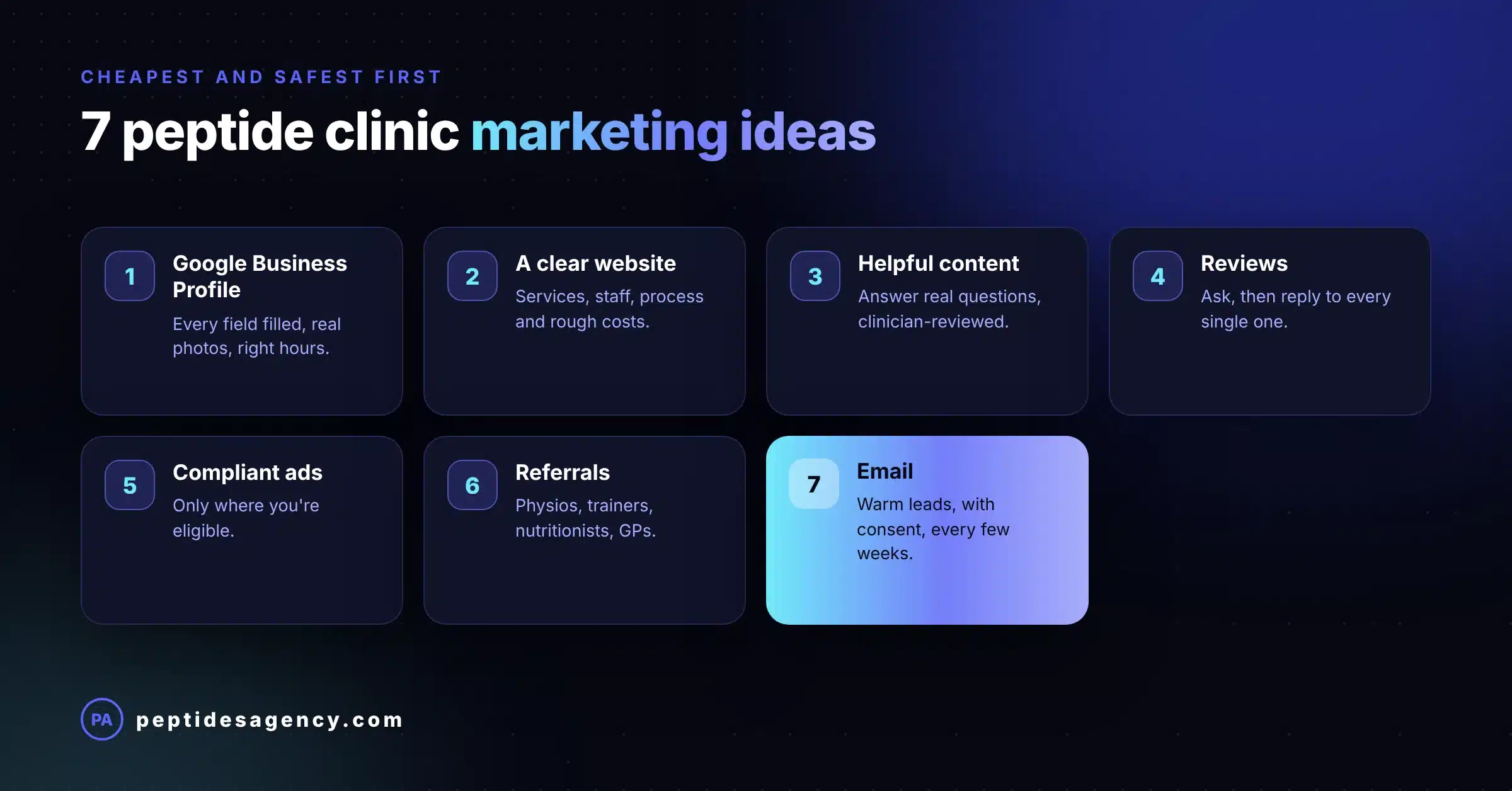
Peptide clinic marketing just needs a different playbook from the gym down the road. Below are seven things we've seen work for the clinics we support. Cheapest and safest first. Fancy stuff last.
What is peptide clinic marketing, really?
It's how the right patients find you, get what you do, and feel fine about booking. That's the job. Search, your website, content, reviews, referrals, and ads if you're allowed. Peptides fall under healthcare rules nearly everywhere, so the clinics winning at this sound calm. Not loud.
Calm works. Peptide patients are researchers. They read reviews in bed at midnight. They compare four clinics. They text a friend who's been. Hype scares that person off. Clarity brings them in.
"Hype scares that person off. Clarity brings them in."
Where should a peptide clinic start?
With the free stuff. Unsexy, yes. But your Google listing and your website cost time, not money. Both get checked by patients and ad reviewers before anything else.
1. Fix your Google Business Profile
For a local patient, this is often the first thing they see. Before your website. Before your Instagram.
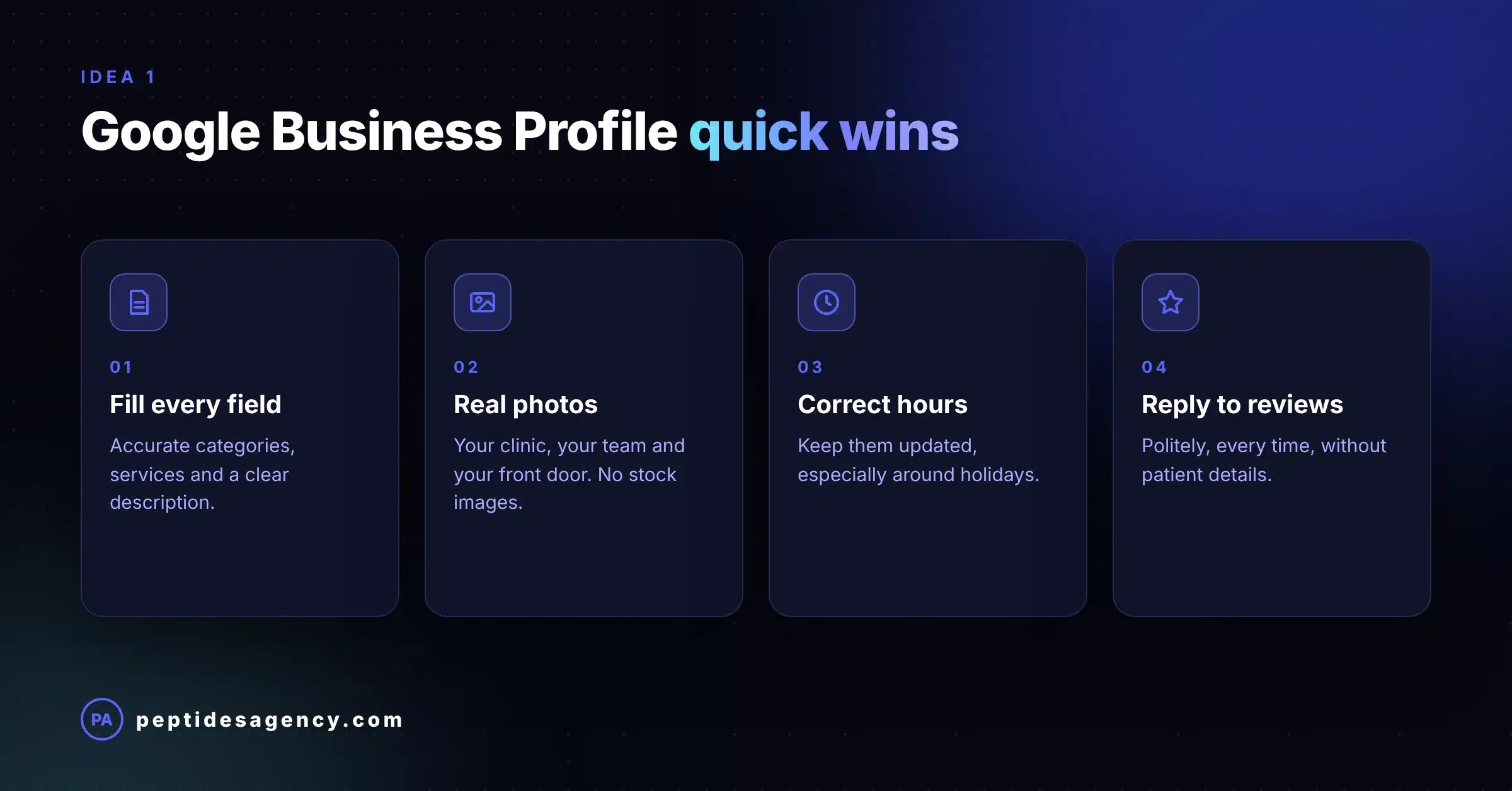
So fill in every field. Pick categories that are actually true. Swap the stock photos for real ones, your waiting room, your team, your front door. Update the hours, especially around bank holidays (nothing annoys people more than turning up to a locked door). Reply to reviews.
Google's guide, tips to improve your local ranking, says three things matter: relevance, distance and prominence. You can't move your building. The other two? Very much in your hands.
Want the bigger picture on local search? Wikipedia's page on local search engine optimisation is a solid overview.
2. Make the website answer real questions
Patients want four answers fast.
- What do you offer?
- Who does it?
- What happens at the first visit?
- Roughly what does it cost?
Answer those plainly and you're ahead of most clinics. Proper service pages. Staff bios with real qualifications. An honest FAQ. A booking button that works on a phone. That beats a gorgeous site that dodges every question. Funnily enough, ad reviewers look for exactly the same stuff.
Keep the language plain and factual. No outcome promises. No dramatic before-and-after gallery. Your patients have seen enough of those to roll their eyes on sight.
How does a peptide clinic build trust online?
Show what you know. Then let patients do the talking. Content checked by a clinician, plus real reviews you actually answer. That's most of it.
3. Write the content people already search for
What's a peptide consultation actually like? Who's a good fit, and who isn't? What should I ask a clinic before I book?
People type those exact questions into Google every day. More and more, they ask AI assistants too. Answer them well and you'll pick up visitors without paying for each click.
One rule. A qualified clinician reads anything medical before it goes live. Put their name and credentials on the page. It's the right thing to do, and search engines reward that kind of real expertise.
4. Ask for reviews. Reply to all of them
Reviews move local rankings. They also move bookings.
Ask happy patients after their visit. Text them a direct link so it takes thirty seconds. Then reply to every review, the five-star ones and the grumpy ones. Never offer a freebie for a review. Never mention patient details in a reply. Not even vaguely.
Funny thing about bad reviews. A calm, kind reply to one often does more good than five glowing ones. People want to see how you act when something goes wrong.
Can peptide clinics run Google and Meta ads?
Some can. It depends on your services, your country and each platform's healthcare rules. Lots of clinics advertise consultations rather than products. Some services need certification first. So check before you budget, and expect a slower review than a pizza shop would get.
5. Run ads only where you're eligible
We've done a full write-up on the Google side: can peptide companies advertise on Google. For Meta, start with its health and wellness policy, which sets the limits on targeting and content.
Wherever you advertise, wording makes or breaks it. Our guide to peptide ad copy shows the kind of lines that survive review.
Some clinics also look at third-party certification. LegitScript certification is recognised by several ad platforms for certain healthcare categories. Worth a look before you assume it does or doesn't apply to you.
How do referrals and email help a clinic grow?
They reach people who already have a reason to trust you. Slower to set up than ads. Cheaper over time. And no algorithm has to approve them.
6. Make friends with other practitioners
Physios. Personal trainers. Nutritionists. GPs. They all see patients who might need you, and those patients already trust them.
Easiest way in? Pop round with a coffee, or send a short email. Say what you do and who it suits. Then ask what their patients usually need. Listen more than you pitch. Keep it professional, and stay inside the rules for your profession and region.
7. Stay in touch by email
Someone who enquired but never booked is a warm lead. So is someone who came once. A short, useful email every few weeks keeps you in mind. Clinic news. A helpful article. A gentle "we've got openings next week".
Get consent first. Keep it relevant. Make unsubscribing one click. And keep health details out of subject lines, because people read email on the bus.
Frequently Asked Questions
What's the single best channel for a peptide clinic?+
Do I need certification before I can advertise?+
How long until marketing brings in patients?+
Can I post patient results online?+
Key Takeaways
- Trust beats hype in peptide clinic marketing.
- Your Google Business Profile is the best free hour you'll spend.
- A clear website and clinician-checked content help search and ad review.
- Reviews and referrals build local trust without ad spend.
- Ads can work for some clinics, once eligibility and wording are sorted.
Conclusion
You don't need to be louder than the clinic down the road. You need to be easier to find, easier to understand and easier to trust. Start free. Add content and referrals. Bring in ads when you're ready. Want help building the plan? Get in touch with our team.
Contact Us