
Can Peptide Companies Advertise on Google? Policies and Marketing Strategies
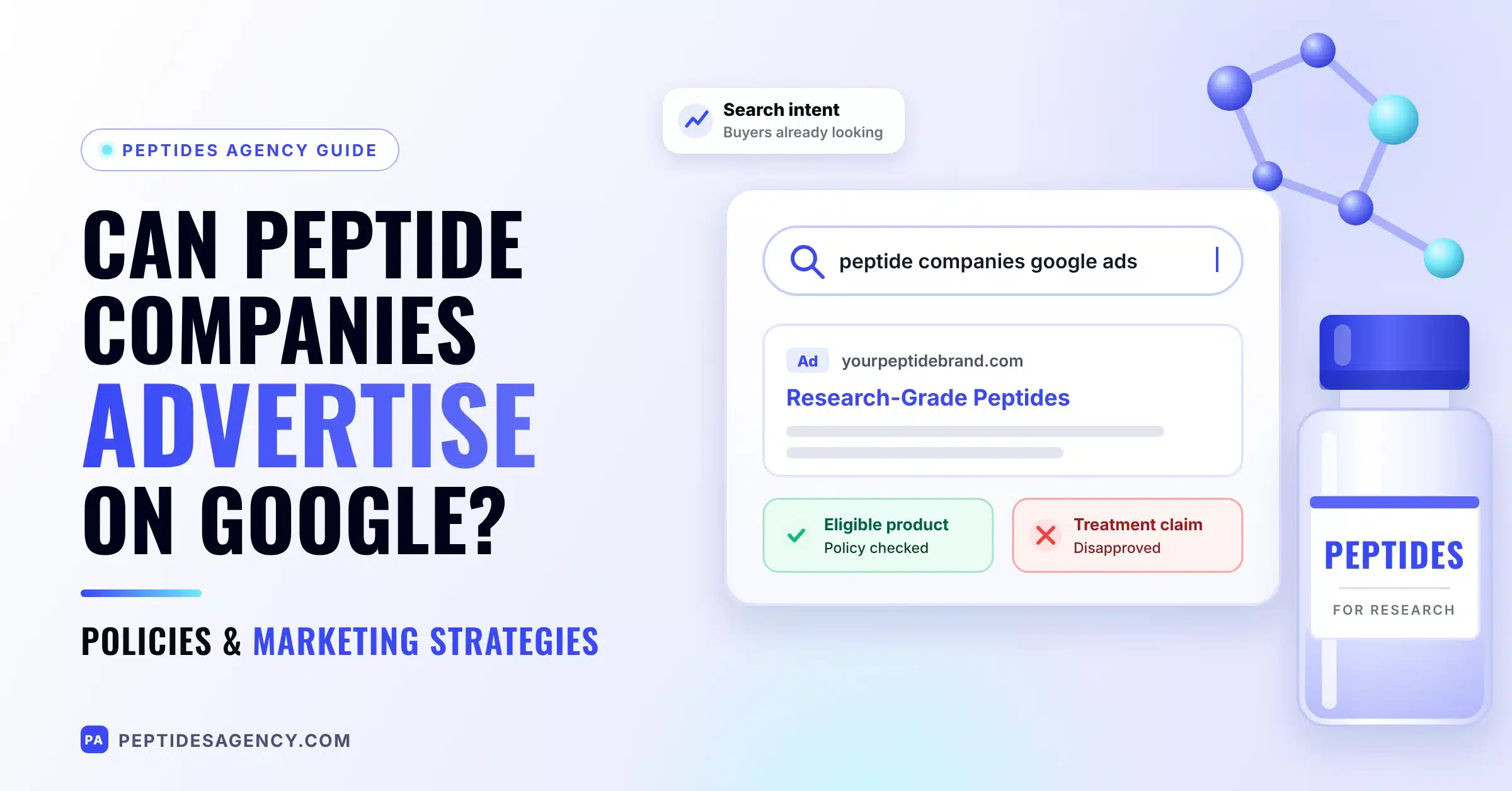
Sometimes. That's the honest answer, and it's frustrating, I know. Whether you can run Google ads for peptides depends on what you sell, what you say about it and where your customers live.
Google Ads is a great way to reach people already searching for a product. With peptides it comes with extra strings, since different peptides have different intended uses, regulatory classifications and safety concerns. Work out where you stand before you pay for a single click.
Why Is It So Tricky?
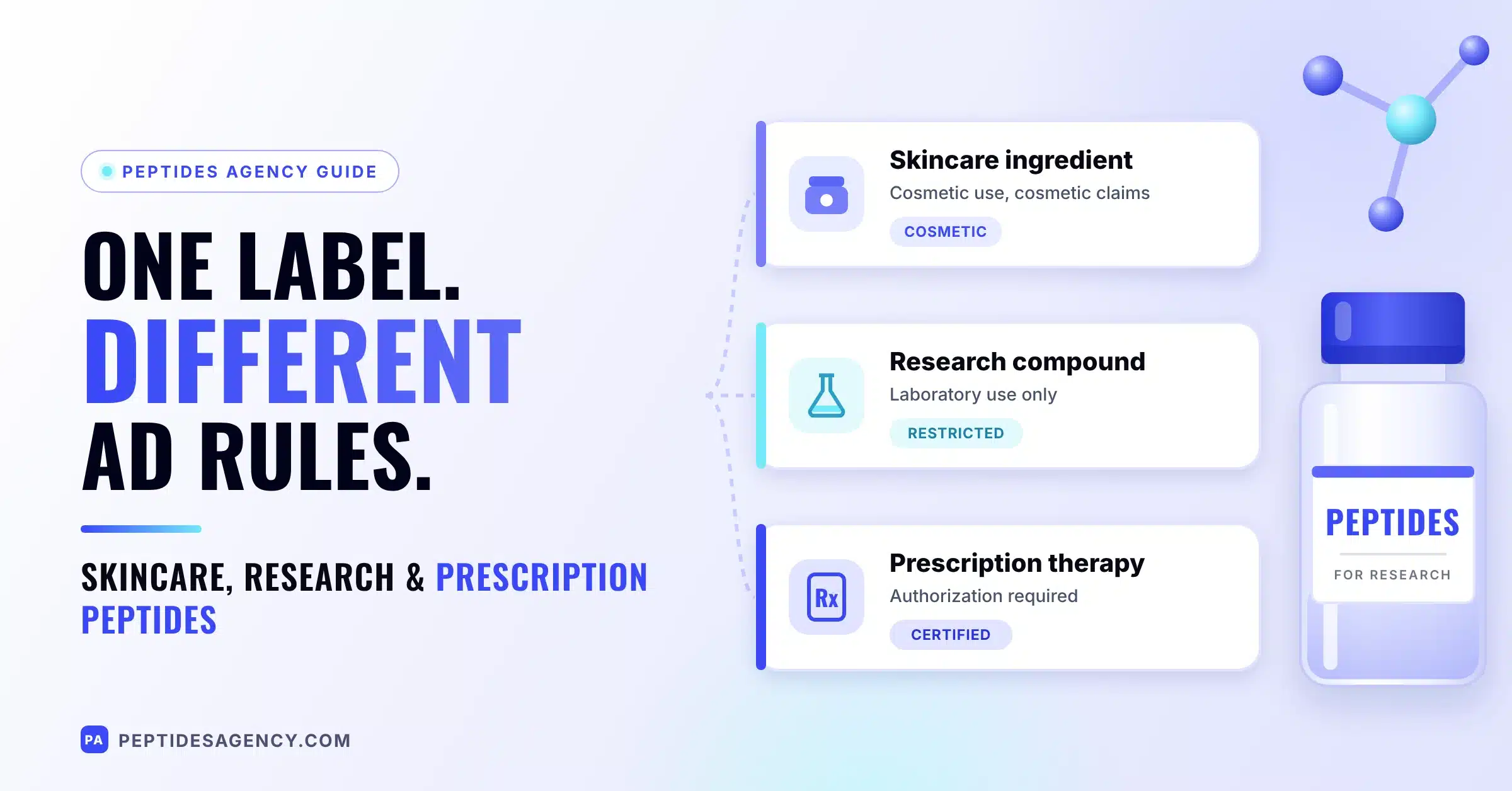
"Peptide" is a huge label. A skincare ingredient, a research compound and a prescription therapy all count, and each lives under different rules. Treat them as one category and you'll get burned.
- Restrictions on certain substances or healthcare products
- Certification or authorization requirements
- Rules that change from country to country
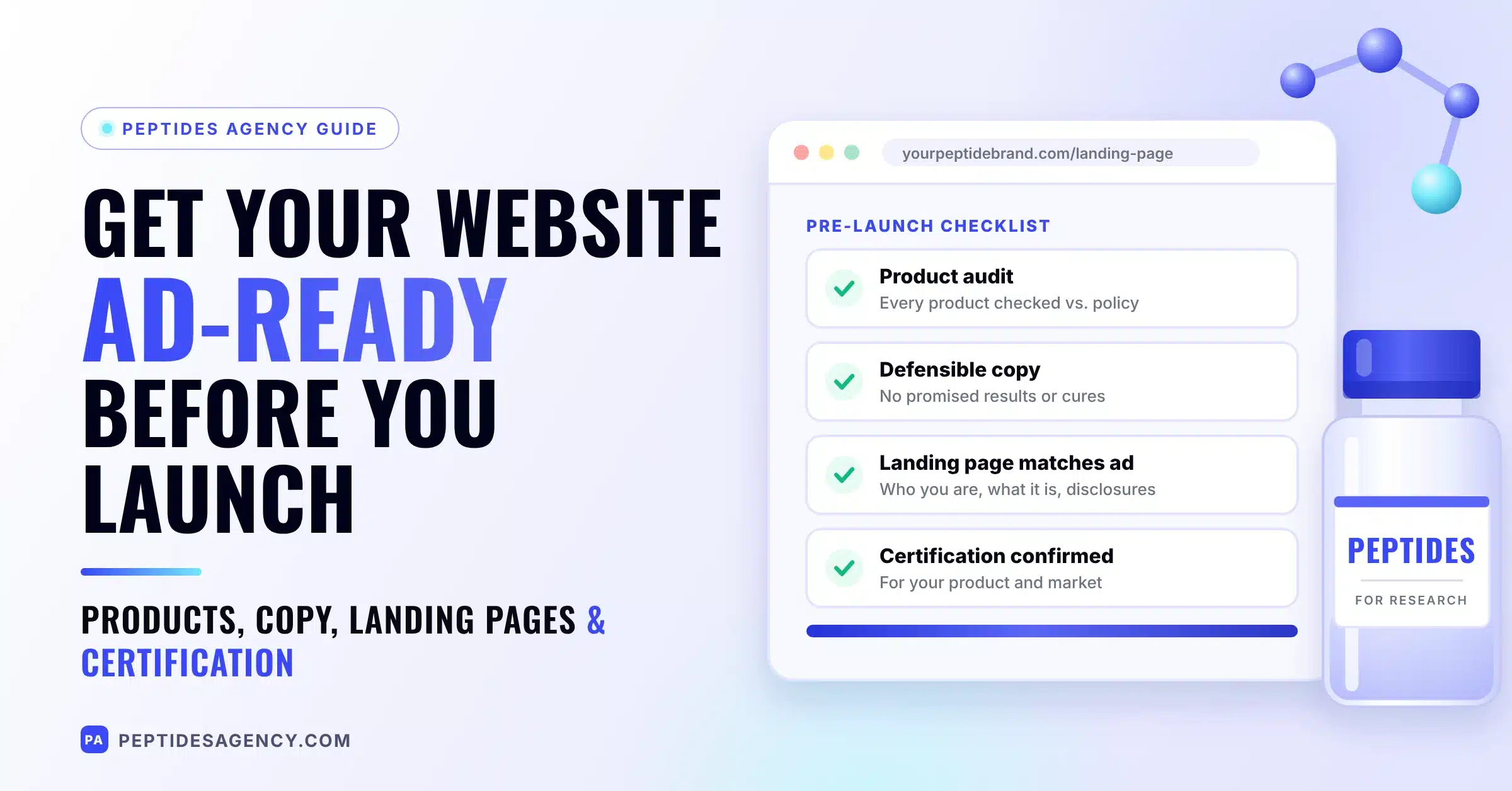
- Treatment claims with nothing to back them up
- Descriptions that mislead
- Landing pages that contradict the ad
So look at the actual product and what it's meant for. Not everything with "peptide" on the label gets the same treatment.
Google's Healthcare and medicines policy is the main rulebook here, and it's worth reading in full before you build anything. For a closer look at why accounts in this category get flagged, see our guide to peptide Google Ads compliance.
Getting Your Website Ready
Begin by listing every product you sell. Then check each one against Google's policies and the local rules wherever you plan to advertise. It's tedious, but it's the step that decides everything after it.
And read your disapproval notices properly. Fix the real issue. Resubmitting the same ad over and over only digs the hole deeper.
What a Sensible Google Peptide Ad Strategy Looks Like
It starts with eligibility, honest positioning and a compliant site. Once you know your product can be advertised, you can build out keywords, write clear ad copy, tighten the landing pages and track qualified enquiries.
- Confirm eligibility for each product and market
- Position the product honestly and keep the site compliant
- Build out keywords and write clear ad copy
- Tighten the landing pages and track qualified enquiries
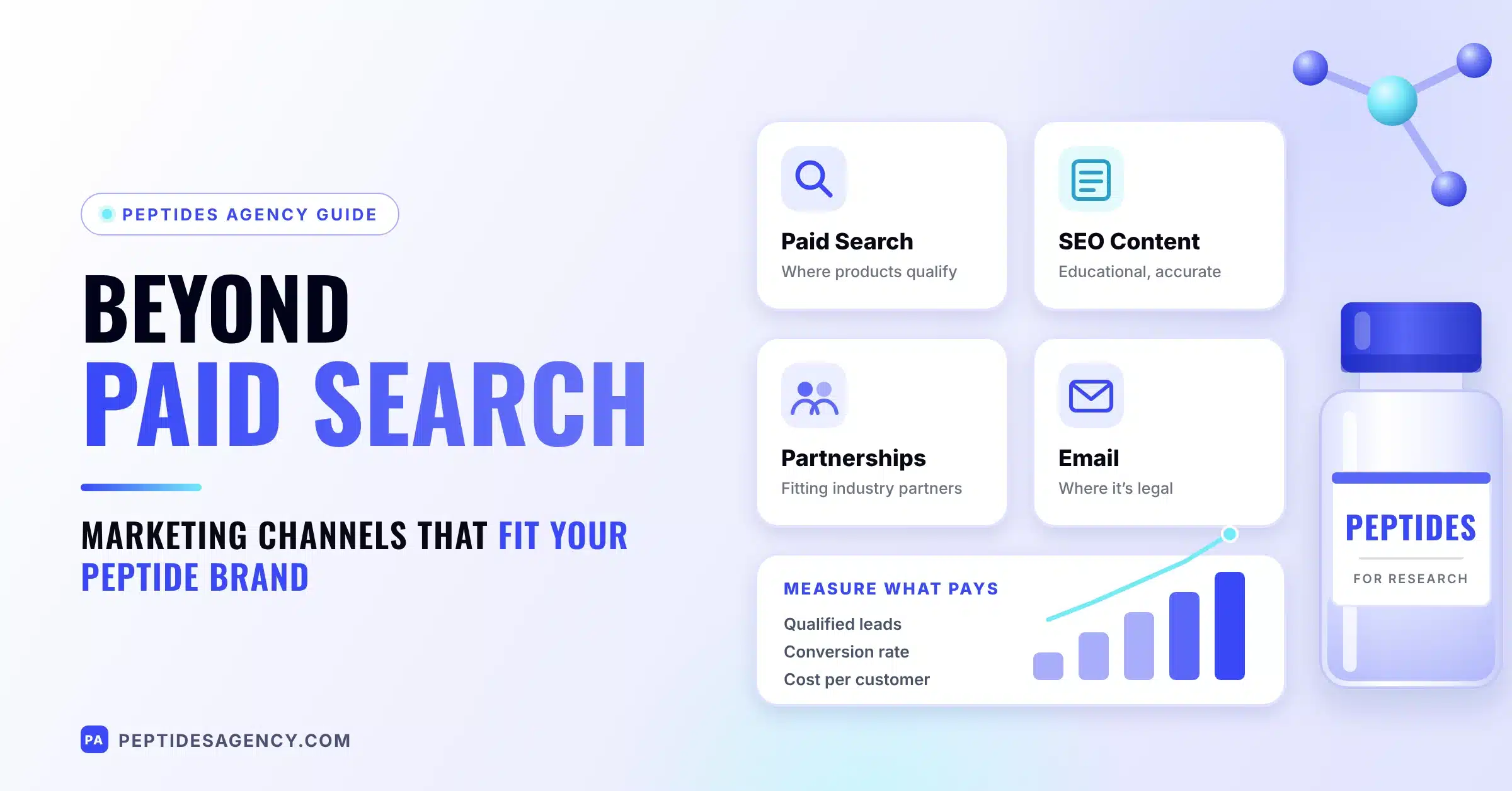
If your products can't run on paid search, don't panic. Educational SEO content, fitting industry partnerships and email (where it's legal) can still bring in customers. Paid social is another option for some brands, covered in our guides to Facebook peptide ads and running peptide ads on Facebook without getting banned. Each of those channels has its own policies, so check them as well.
Getting More From Your Marketing
Useful content comes first. Share accurate information about your business and products, have qualified people review any medical or scientific claims, and keep the evidence handy.
Sort your keywords by intent. Someone asking "what are peptides" wants something very different from someone ready to buy. Answer the question they asked, and don't push products in ways the rules forbid.
"What are peptides?" Answer the question with accurate, educational content.
Someone ready to buy. Point them to a clear, compliant product page that matches the ad.
Measure what pays: qualified leads, conversion rates, cost per customer. An approved ad isn't automatically a profitable one.
A specialist agency can help too. A good one reviews your campaign setup, spots website issues and explains the requirements. It still can't override the platform's review, though.
"An approved ad isn't automatically a profitable one."
For more background, see Wikipedia on peptides and Google Ads.
Frequently Asked Questions
Can every peptide company advertise on Google?+
Why do peptide ads get disapproved?+
Can SEO help peptide businesses grow?+
Should you launch ads before reviewing your website?+
Key Takeaways
- Whether peptide companies can advertise on Google depends on the product, the claims and the market.
- "Peptide" covers skincare ingredients, research compounds and prescription therapies, and each follows different rules.
- Audit every product against Google's policies and local rules before you spend anything.
- Avoid promised results and unsupported treatment claims, and make sure the landing page matches the ad.
- Check certification requirements before launch, and fix the real issue behind any disapproval.
- If paid search isn't an option, SEO content, partnerships and email can still bring in customers.
Conclusion
Google advertising isn't simple for peptide businesses, but a careful look at eligibility, website content and policy requirements gives you solid ground to decide from. Keep the information accurate, be open with customers and choose marketing channels that fit your products and markets. If you want a second pair of eyes on your setup, Peptides Agency can review your account and website before you launch.
Contact Us