
How to Write Peptide Ad Copy That Gets Approved
Funny thing about rejected peptide ads. We open them up, and the product is almost never the issue. It's one sentence. Sometimes one word. A clinic that's fully allowed to advertise writes "reverse" when it should've written "learn about". Red label. Again.
Good news? Peptide ad copy is fixable. You don't need a law degree. You need a feel for which words make reviewers twitchy, and the habit of describing instead of promising. That's it, really. Let me show you what we mean.
Why does peptide ad copy get rejected so often?
Short version: the ad promises a health result, or it talks about the reader's body, or the product isn't allowed in the first place. Peptides sit under healthcare rules on Google and Meta. So every word gets read slowly. Much more slowly than an ad for running shoes.
- Google's rulebook is the healthcare and medicines policy.
- Prescription drugs, unapproved substances, health claims.
- Some peptide products land right in the middle of it.
- Meta has its own. The personal health and appearance policy is the one that bites peptide clinics most.
- Bodies, results, "the new you".
- All touchy.
Not sure what even counts as a peptide? Wikipedia's peptide page is a decent five-minute read. The word covers a moisturiser ingredient and a prescription injection. Same word. Totally different rules. No wonder people get confused.
Which words get peptide ads rejected?
We keep a mental blacklist. Cure. Treat. Reverse. Guaranteed. Miracle. Breakthrough. And any opener starting "Do you suffer from" or "Tired of your". Those last two are basically asking for it.
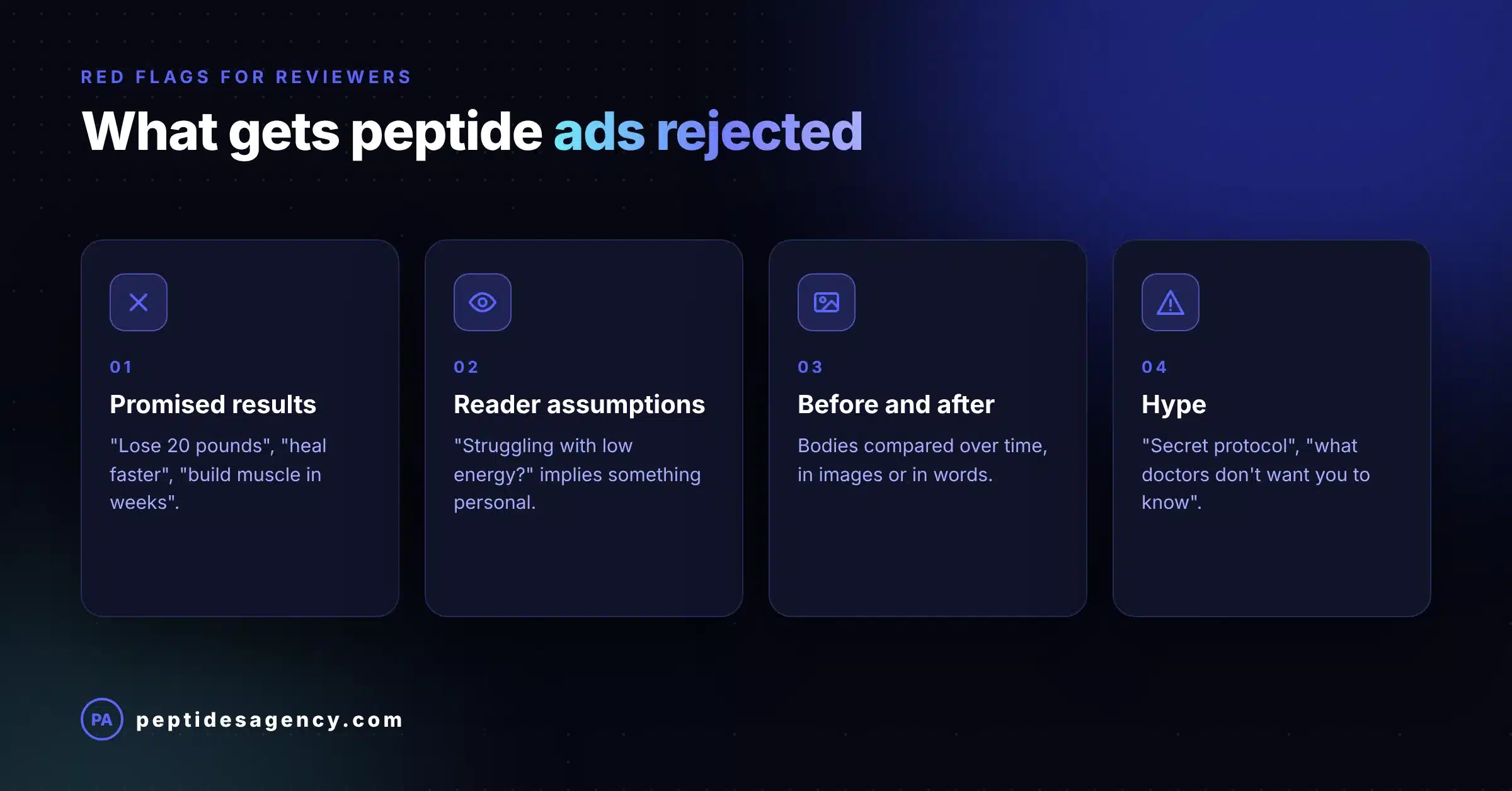
When a clinic sends us ads to check, here's what we hunt for.
Promised results
"Lose 20 pounds." "Heal faster." "Build muscle in weeks."
Doesn't matter if there's a study behind it. An ad can't promise a stranger a personal outcome. Google won't have it. Meta won't either.
Copy that "knows" the reader
This one's sneaky. Meta hates ads that seem to know something private about you. Its personal attributes policy is why "Struggling with low energy?" gets binned. Meanwhile "Learn about our wellness consultations" usually goes straight through. Tiny difference. Big result.
Before and after
Two photos side by side. Or "I went from this to this" in words. Either way, expect trouble, especially on Meta.
Hype
"What doctors don't want you to know." "Secret protocol." "This week only."
Reviewers read that and think "misleading". Honestly? Fair.
Urgency isn't banned outright, by the way. "Booking opens Monday" is fine. It's true, and it's about your calendar. "Last chance before it's gone forever" is a different animal. That's pressure, and reviewers can smell it from a mile off. If the deadline is real and boring, you're probably okay.
How do you rewrite it so it passes?
Stop selling the outcome. Sell the appointment. Who you are, what happens at a consult, what the next step is. Plain words. No guesses about the reader. And the landing page has to say the same thing.
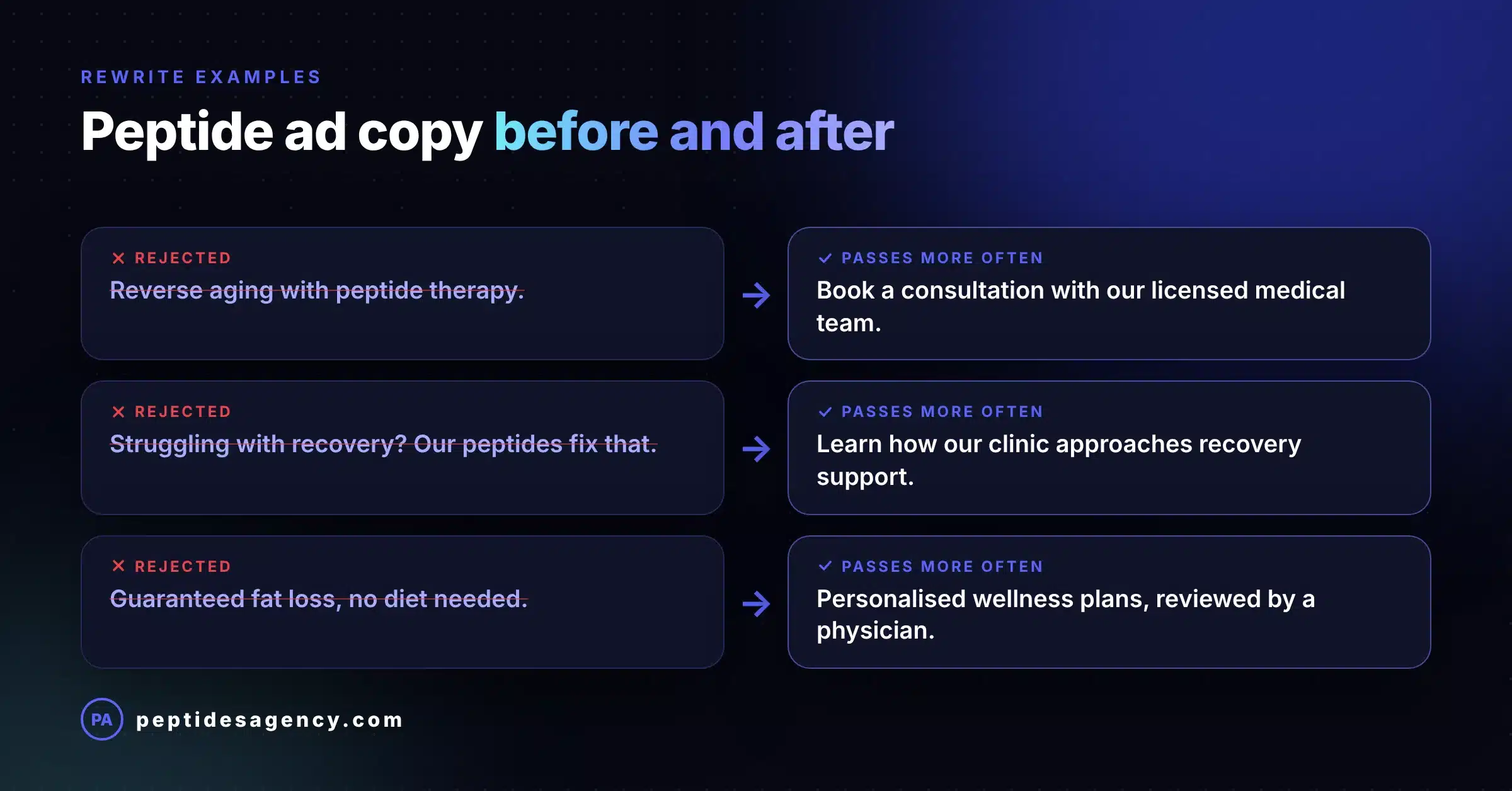
Some swaps we make all the time:
"Reverse aging with peptide therapy"
"Book a consultation with our licensed medical team."
"Struggling with recovery? Our peptides fix that"
"Learn how our clinic approaches recovery support."
"Guaranteed fat loss, no diet needed" (yes, someone wrote that)
"Personalised wellness plans, reviewed by a physician."
Boring? A bit. Effective? Usually. Will it pass every time? No. Eligibility still depends on what you offer and where you offer it. But you've just removed the most common reasons ads die.
Our two-minute test
Before anything goes live, we ask four questions.
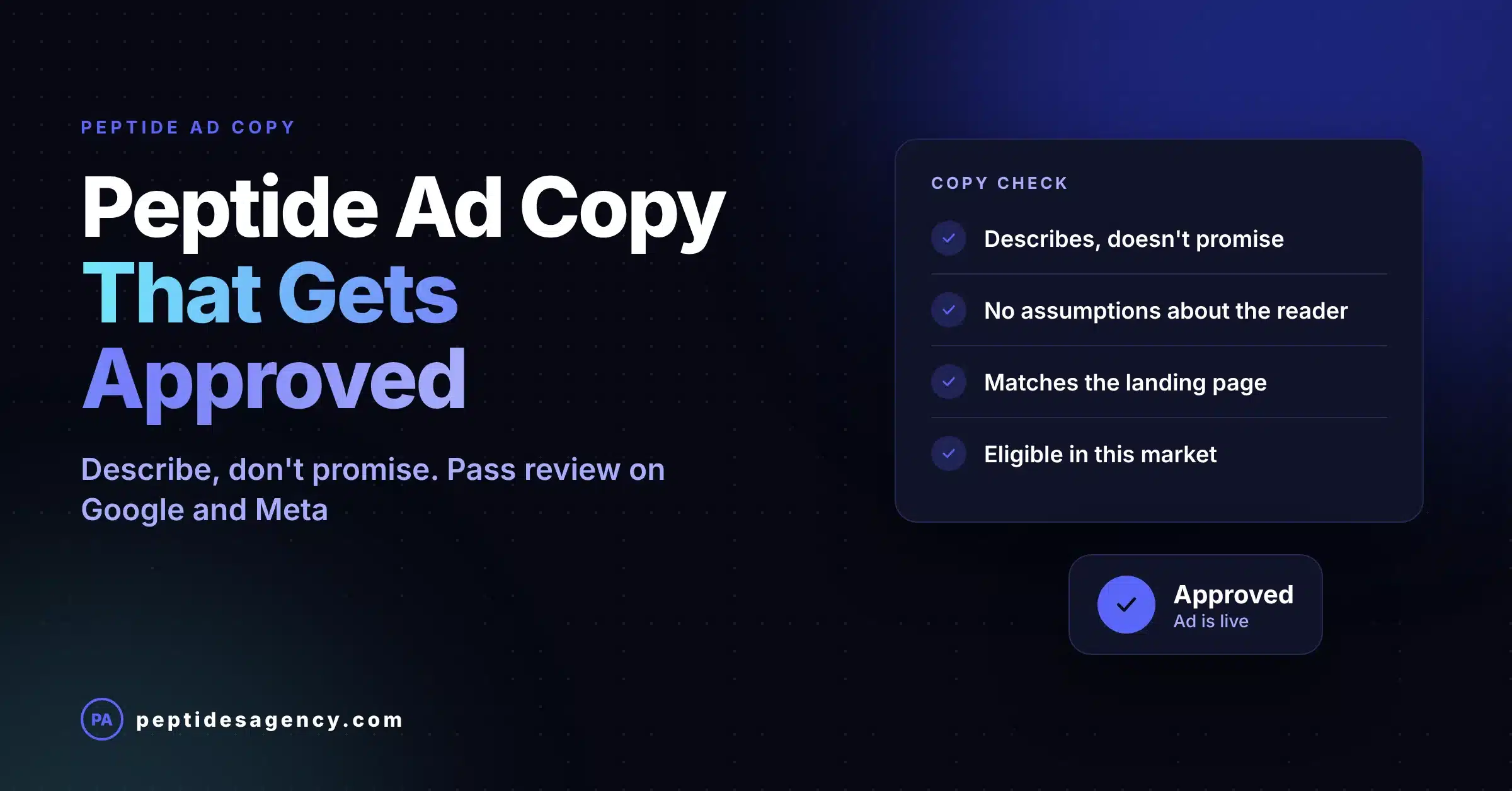
- Does it describe, or does it promise?
- Does it assume something about the reader?
- Does the landing page match?
- Is this product even allowed in this country?
Any wrong answer, we fix it first.
Here's a weird tip that works. Read the ad out loud. If it sounds like a 2am TV shopping channel, a reviewer will hear the same thing.
Also, start a swipe file. A plain doc. Lines that passed go in one column, lines that failed go in the other. After a few months you'll have your own little bank of approved wording. New ads get quicker. The whole team sounds the same. And if you ever need to appeal, you can show the reviewer a long history of careful copy.
Does the landing page affect approval?
Massively. Reviewers click through. Always.
So picture this. A clinic writes a lovely, careful ad. Then it links to a page from two years ago, full of testimonials about "dramatic transformations". Ad rejected. Everyone blames the ad. Nobody looks at the page.
We see that constantly. Before you rewrite an ad for the third time, grab your phone. Open the landing page. Read it like a stranger who works for Google. Spot the problem? Thought so.
The page should say what the service is and who provides it. Show contact details. Skip the outcome promises. Lose the before-and-after gallery. Our guide to peptide Google Ads compliance goes deeper on page requirements.
Google or Meta: who's stricter?
Both. Just about different things.
Google worries more about the product itself. Is it eligible? Does it need certification? Meta worries more about tone, pictures and how the ad talks to the person scrolling.
So write two versions. We tend to go slightly more clinical for Google search, since people there are already looking for a provider. On Meta we go softer and more educational, because you're interrupting someone's lunch break. Our post on Facebook peptide ads covers the Meta side in more detail.
"Stop selling the outcome. Sell the appointment."
One honest note. Nobody can guarantee approval. Not us, not anyone. The platforms decide, and they move the goalposts now and then.
Frequently Asked Questions
Can I mention a specific peptide by name in an ad?+
Google approved my ad but Meta rejected it. Why?+
Are patient testimonials OK?+
Should I appeal a rejected peptide ad?+
Key Takeaways
- Most rejections come from wording, not the product.
- Drop outcome promises, "you" assumptions, before-and-afters and hype.
- Sell the appointment, not the result.
- Check the landing page before blaming the ad.
- Write separate peptide ad copy for Google and Meta.
Conclusion
Good ad copy in this space informs. It doesn't promise. Want a second pair of eyes before you hit submit? Send your ads over and we'll take a look. And if you're thinking beyond ads, our guide to peptide clinic marketing has plenty more ideas.
Contact Us